At whatever point you get ventures for designing graphics for various media materials, there are sure rules you have to know before daring to the complexities and expound universe of graphic design.
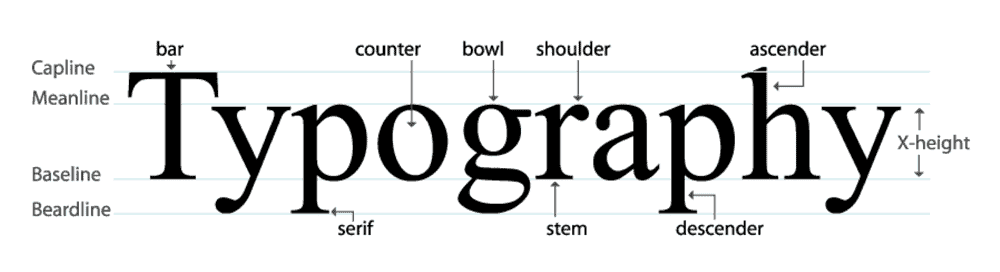
One of the components considered in graphic design is typography. This is how you use and make your content to turn out with an outcome that supplements your pictures and design of the entire media material, regardless of whether it’s for print or web.
For typography, here are five of the essential principles to pursue (or to break, whichever suits your inventiveness right now):
Rule No. 1- DO NOT utilize every one of the textual styles in a single report.
Each designer has their assortment of text styles, which the individual in question uses for each design venture. As one designer would state: “In case you’re a designer, it nearly abandons saying that you possess text styles Lots of textual styles.”
Besides the current textual styles in the product program being utilized, most designers have their rundowns that were added to the previously existing rundown. What’s more, in light of the accessibility of such a large number of text styles, one might be enticed to use the same number of, if not the entirety of the textual styles that the person claims.
Continuously recollect that effortlessness is more appealing than disorder and perplexity. At the point when you start utilizing numerous text styles in a single report, the message regularly loses all sense of direction in the clutter. Moreover, such a large number of text styles can divert the peruser from the first purpose of the design-to get a message over. By and by, this doesn’t imply that you must be dull and exhausting by adhering to the ordinary “two-textual style rule”, which expresses that you needed to have one textual style for headings and another for content. So where’s the innovativeness in that? Simply try to have a motivation behind why you need to veer off from the standard and decided to utilize the text styles.
Rule No. 2 -Serif type is simpler to the eyes than sans serif.
There’s an old standard in the graphics world that goes “Serif type is simpler to peruse because the serifs draw your eye from character to character.” Hence, sans serif type is in many cases utilized for headings and short amounts of content. Learn more about Graphic Designing by , Joining Digital Technology Institute – Premium Graphic Designing Institute In Delhi.
Truth to tell, all textual styles can be caused lucid (to aside from, well, perhaps for Wingdings) with the perfect design. With sans serif, even though it needs more driving than serif type, it can give your reports a cutting edge look and is the well-known body message in Europe.
Rule No. 3 -Putting two spaces after a period is a no-no.
In the former times, when typewriters are the doohickeys for scholars, two spaces after a period was the standard to demonstrate the finish of a sentence.
With the beginning of innovation, textual styles have characters of their own, with various widths, that putting two spaces after a period is never again required. Here and there, this standard can make a preferably irritating defect that makes a stop rather over assist you with pinpointing the finish of each sentence.
Rule No. 4 -DO NOT utilize every single capital letter.
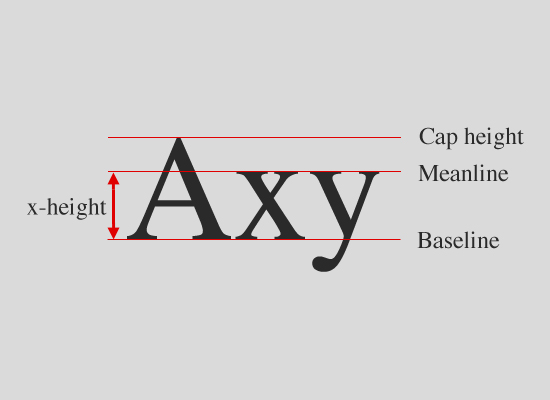
One designer said that when utilizing all capitals in the content, there are no ascenders or descenders. The two are what makes it simple to recognize the state of a word. “The state of pretty much every word turns into a square shape, and it’s harder to peruse.”
In any case, this doesn’t likewise imply that you can’t utilize capital letters. Where would you be able to utilize capital letters? Short expressions or headings do look appealing in all tops. Sans serif likewise works better in all tops.
Rule No. 5 -DO NOT focus on enormous amounts of content.
The eyes go from left to right when perusing. It’s the best approach. It quickly filters one line, at that point goes from the correct side of the page back to one side of the page. At the point when content is focused, it makes it harder for the eyes to be advised to discover where the following content starts again on the left half of the page and makes it simple for the peruser to avoid down lines of content.
This time, it’s not very simple to twist the guidelines. The most ideal way is still to spare focusing on headings that don’t run more than a few lines profound.
 Graphic Sphere